
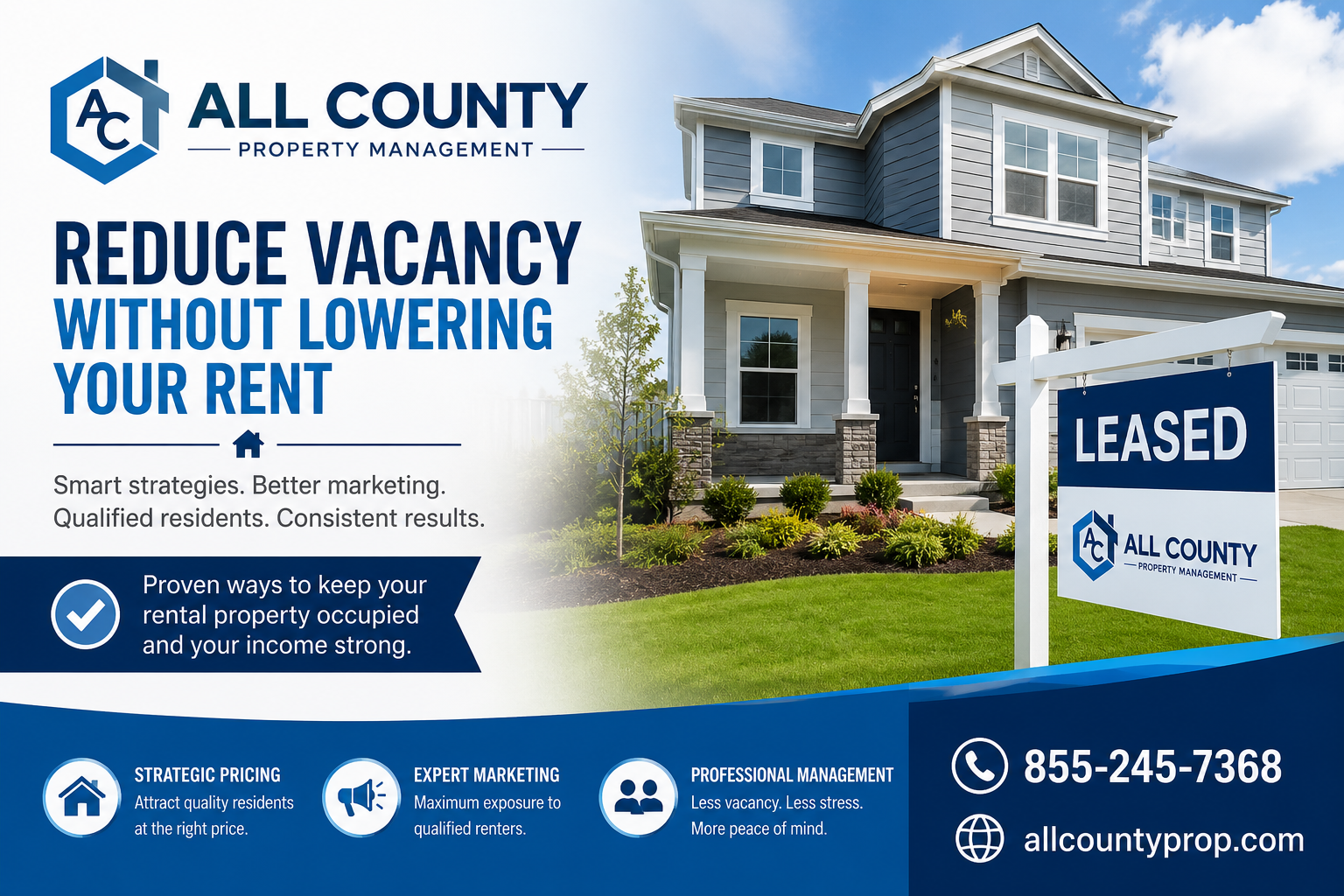
How to Reduce Rental Vacancy Without Lowering Your Rent
Every day your rental property sits vacant costs you money. Lost rent, utilities, lawn care, mortgage payments, insurance, and maintenance expenses continue whether a resident is living there or not. Because of this, many landlords panic after only a few weeks and immediately reduce the rent.
While lowering the rent may seem like the quickest solution, it is rarely the best one.
In many cases, vacancy is caused by poor marketing, delayed response times, pricing mistakes, or a property that simply isn’t being presented at its full potential—not because the asking rent is too high.
Professional property managers know there are many ways to reduce vacancy while protecting your rental income. Instead of racing to the bottom on price, successful investors focus on creating demand, attracting qualified residents, and moving quickly through every stage of the leasing process.
In this guide, we’ll show you practical strategies that help reduce rental vacancy while maximizing your long-term return on investment.
Understand What Vacancy Really Costs
Many landlords focus only on the monthly rent they are missing.
The true cost is much higher.
A vacant property often includes:
- Mortgage payments
- Property taxes
- Insurance
- HOA dues
- Lawn care
- Pool service
- Utilities
- Security monitoring
- Cleaning expenses
- Advertising costs
- Lost cash flow
For example, a property renting for $2,400 per month loses roughly $80 every day it sits vacant before considering carrying costs.
Reducing vacancy by just two weeks could save well over $1,000 while keeping your original rental rate intact.
Price the Property Correctly From Day One
One of the biggest mistakes landlords make is pricing based on emotion instead of market data.
Owners often believe:
- “My house is nicer.”
- “I spent $30,000 remodeling.”
- “My neighbor gets this much.”
Unfortunately, residents compare available homes—not renovation budgets.
Professional managers evaluate:
- Current competition
- Days on market
- Seasonal demand
- Neighborhood trends
- Comparable leased properties
- Property features
The goal isn’t to advertise the highest rent possible. It’s to advertise the rent that attracts strong applicants quickly.
Pricing correctly from the beginning often produces higher annual income than overpricing and later reducing the rent.
If you’re unsure how to determine rental pricing, you can use resources such as Rentometer.com to determine local market trends and information about pricing your investment property.
Professional Photography Makes an Enormous Difference
Most prospective residents decide whether to schedule a showing within seconds of viewing your online listing.
Dark cellphone photos immediately reduce interest.
Professional photography highlights:
- Natural lighting
- Spacious rooms
- Updated kitchens
- Outdoor living spaces
- Community amenities
- Property condition
Listings with high-quality images generally receive significantly more online engagement than listings with poor photos.
Respond to Prospective Residents Immediately
Speed matters.
Many prospective residents contact multiple properties simultaneously.
If one landlord waits until tomorrow to respond while another schedules a showing within minutes, guess who usually earns the application?
Professional property managers often utilize automated systems that allow inquiries to receive immediate responses, schedule showings online, and submit applications without unnecessary delays.
Quick communication creates momentum.
Make the Property Move-In Ready
Small maintenance issues often create large psychological barriers.
Fresh paint, clean flooring, working fixtures, and attractive landscaping all contribute to stronger first impressions.
Before marketing your property:
- Replace burned-out bulbs.
- Touch up paint.
- Deep clean every room.
- Pressure wash exterior surfaces.
- Service HVAC systems.
- Repair minor maintenance issues.
- Ensure appliances operate properly.
Residents often assume visible cosmetic issues indicate hidden maintenance problems.
Before listing your property, review our guide on preparing your rental property for new residents.
Write Listings That Sell the Lifestyle
Many advertisements simply list bedrooms and bathrooms.
Great marketing explains why someone wants to live there.
Instead of:
Three-bedroom home with two baths.
Try:
Enjoy an open-concept living space, updated kitchen, fenced backyard perfect for entertaining, and convenient access to shopping, restaurants, parks, and major commuter routes.
Lifestyle marketing creates emotional interest.
Advertise Everywhere Qualified Residents Search
Posting on one website isn’t enough.
Professional property managers distribute listings across multiple rental platforms, company websites, social media channels, and search engines to maximize exposure.
The wider the audience, the greater the chance of finding the right resident quickly.
Make Scheduling Easy
Modern renters expect convenience.
Allowing prospective residents to request tours online, receive automated confirmations, and choose convenient appointment times reduces friction and increases showings.
Every unnecessary obstacle costs opportunities.
Screen Applicants Thoroughly—but Efficiently
Reducing vacancy should never mean accepting the first applicant.
Quality screening protects your investment while reducing turnover and future vacancies.
A comprehensive screening process typically includes:
- Credit review
- Income verification
- Employment verification
- Rental history
- Criminal background screening (where legally applicable)
- Eviction history
A qualified resident who stays for years is far more valuable than filling the property quickly with an unqualified applicant.
Visit our ultimate screening checklist for landlords and learn why selecting the right resident protects your investment.
Focus on Resident Retention
The easiest vacancy to eliminate is the one that never occurs.
Satisfied residents often renew their leases, reducing turnover costs and eliminating marketing expenses.
Retention strategies include:
- Fast maintenance response
- Clear communication
- Fair lease renewals
- Professional management
- Preventative maintenance
- Respectful interactions
Long-term residents often produce the highest returns for property owners.
Understanding your role as a landlord and your tenant’s right is imperative to keeping long term tenants and staying out of trouble. To learn more about your landlord obligations visit HUD’s Landlord Guidelines.
Stay Ahead of Maintenance
Deferred maintenance frequently leads to resident dissatisfaction.
Routine inspections and preventative maintenance reduce unexpected breakdowns and improve resident satisfaction.
Regular maintenance also protects property value over time.
Time Your Lease Expirations Strategically
Whenever possible, avoid lease expirations during slower rental seasons.
Professional property managers often structure lease terms to place future renewals during stronger leasing months, helping reduce future vacancy.
Build a Strong Online Reputation
Prospective residents increasingly research property management companies before applying.
Positive online reviews create confidence and encourage applications.
Respond professionally to reviews, maintain accurate business listings, and provide exceptional customer service that residents remember.
Use Data Instead of Guesswork
Successful landlords track important metrics, including:
- Days on market
- Inquiry volume
- Showing-to-application ratio
- Application approval rate
- Lease renewal percentage
- Vacancy rate
These numbers help identify where improvements can be made.
Know When Professional Property Management Pays for Itself
Many owners hesitate to hire a professional manager because they focus solely on the management fee.
However, reducing vacancy by even a few weeks each year can often offset much of that cost.
Professional managers bring:
- Advanced marketing
- Faster response times
- Professional photography
- Extensive advertising
- Proven screening systems
- Efficient leasing
- Resident retention programs
- Legal compliance expertise
The result is often more consistent occupancy and improved long-term returns.
Hiring a professional company can be the smartest decision a landlord makes, learn more information on the differences between self managing and hiring a professional.
Frequently Asked Questions
How long should a rental property stay vacant?
The answer varies by market, but well-priced, well-marketed properties in desirable areas often lease within a few weeks. Extended vacancies may indicate pricing, marketing, or property presentation issues.
Should I lower my rent if my property isn’t renting?
Not necessarily. Review your pricing, photos, listing quality, response time, and competition before reducing rent. Improving these factors may generate more interest without sacrificing income.
Does professional photography really matter?
Yes. High-quality photos create a stronger first impression, attract more online views, and often lead to more showings and applications.
What is the biggest cause of rental vacancy?
Common causes include incorrect pricing, poor marketing, delayed responses to inquiries, inadequate property preparation, and resident turnover.
Can a property manager help reduce vacancy?
Professional property managers use market analysis, advertising, screening, leasing systems, and resident retention strategies designed to keep properties occupied and performing well.
Final Thoughts
Vacancy is one of the largest expenses rental property owners face, but reducing vacancy doesn’t have to mean lowering your rent.
By pricing strategically, presenting your property professionally, responding quickly, maintaining your investment, and focusing on resident satisfaction, you can attract qualified residents while protecting your income.
If managing these responsibilities feels overwhelming, partnering with an experienced property management company can make all the difference.
At All County Property Management, we help property owners across the country reduce vacancy, attract high-quality residents, and maximize long-term investment performance. If you’re ready to spend less time worrying about empty properties and more time building wealth, find an All County office near you and discover how professional management can help your rental succeed.