
Financing Investment Properties: What Every Rental Property Owner Should Know
- Apr 08, 2026
- 4 min read
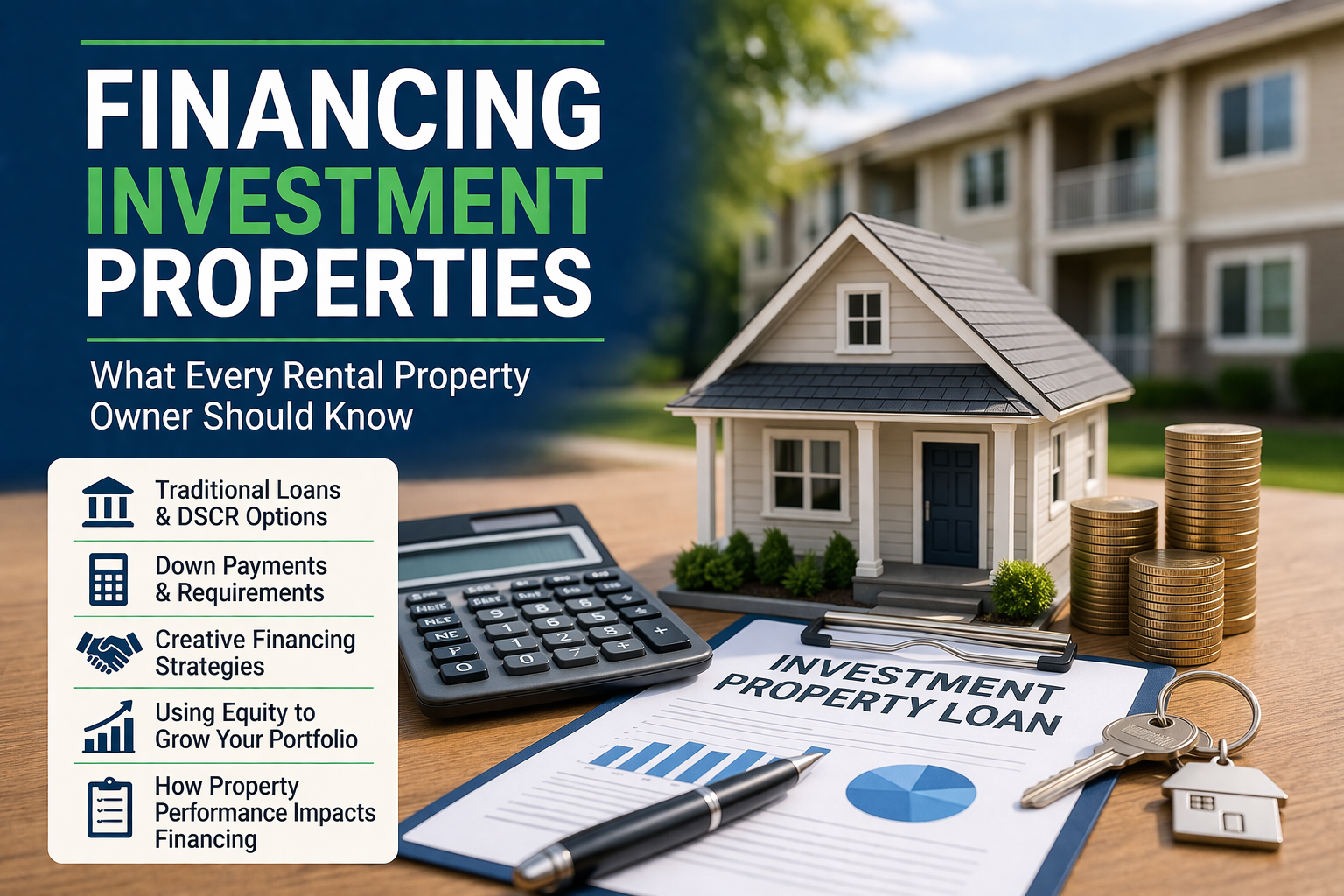

Financing Investment Properties: What Every Rental Property Owner Should Know
Investing in rental properties is one of the most effective ways to build long-term wealth, but financing investment properties is very different from purchasing a primary residence. Understanding your options — including creative financing strategies — can help you grow your portfolio faster and make smarter investment decisions.
Whether you’re buying your first rental or expanding your holdings, here’s what every investor should know about financing investment properties. “For investors new to financing terms, our Property Management Glossary provides helpful definitions to better understand loan structures, cash flow, and investment strategies.”
Investment Property Loans Are Different
Lenders view rental properties as higher risk than owner-occupied homes. Because of this, investment property financing typically includes:
- Higher down payments (often 15–25%)
- Slightly higher interest rates
- Stronger credit requirements
- Proof of cash reserves
- Rental income analysis
Planning ahead for these requirements can make the financing process smoother and position you for long-term success. “When structured properly, financing investment properties becomes a key component of long-term wealth-building through real estate.”
Traditional Financing Options
Many investors start with conventional financing. These loans are familiar and widely available.
Common traditional options include:
- Conventional investment property loans
- Portfolio loans from local banks
- Multi-property financing programs
- Cash-out refinance from an existing property
- Home equity lines of credit (HELOCs)
These options work well for investors who have strong credit, stable income, and available capital for down payments.
DSCR Loans (Investor-Friendly Financing)
Debt Service Coverage Ratio (DSCR) loans have become increasingly popular with rental property investors. These loans focus on the property’s income rather than the borrower’s personal income.
With DSCR financing:
- Rental income helps qualify for the loan
- Less emphasis on tax returns
- Ideal for self-employed investors
- Good for scaling portfolios
This option can be particularly helpful for investors who want to grow without being limited by traditional income documentation. Investors interested in income-based financing can learn more about how DSCR loans work and their qualification requirements from reputable mortgage and lending resources
Creative Financing Options for Investment Properties
Creative financing can help investors move faster, preserve cash, and acquire properties that might otherwise be out of reach.
Seller Financing
In seller financing, the property owner acts as the lender. This can provide:
- Lower down payments
- Flexible terms
- Faster closing timelines
- Less strict qualification requirements
This option works best when the seller owns the property free and clear or is motivated to structure a deal.
Subject-To Financing
With a “subject-to” deal, the buyer takes ownership while the existing loan remains in place. The investor makes payments on the seller’s mortgage.
Benefits include:
- Low upfront cash
- No new loan qualification
- Faster acquisition
This strategy requires careful structuring and legal guidance but can be a powerful growth tool. “Investors can also review lending requirements and mortgage guidance from financial institutions to better understand qualification standards.”
Private Money Lending
Private lenders — individuals rather than banks — often provide short-term financing for investment purchases.
Advantages:
- Flexible underwriting
- Faster approvals
- Negotiable terms
- Ideal for value-add properties
Many investors use private money to acquire properties quickly, then refinance into long-term financing.
Partnerships
Partnering with another investor is another creative way to finance rental properties.
One partner may:
- Provide capital
While the other: - Manages the property
- Handles operations
- Oversees renovations
This allows investors to scale without taking on all the financial burden themselves.
Lease Option / Rent-to-Own
In some situations, investors can control a property through a lease option. This allows time to:
- Improve cash flow
- Increase property value
- Secure long-term financing later
This strategy can work well in competitive markets.
Using Equity to Grow Your Portfolio
Many experienced investors expand by leveraging existing properties. This may include:
- Cash-out refinancing
- HELOCs
- Blanket loans
- Cross-collateralization
Using equity strategically can accelerate growth while keeping cash available for additional opportunities. For additional insights, Sandy Ferrera’s book Obtaining Long-Term Wealth offers guidance on building financial success through smart real estate investing.
Why Rental Performance Matters to Lenders
Lenders want to see consistent income and well-managed properties. Strong property management can help by:
- Reducing vacancies
- Maximizing rental income
- Maintaining property condition
- Providing accurate financial reporting
- Improving long-term asset value
Proper maintenance planning helps protect your investment and long-term profitability. Partnering with a professional property management company like All County helps investors improve property performance, support future financing, and grow their portfolio.
Final Thoughts
Financing investment properties doesn’t have to be complicated. From traditional loans to creative financing strategies, there are many ways to structure deals that align with your goals.
The key is to understand your options, plan for long-term growth, and ensure your rental properties perform at their best.
With the right financing strategy — and strong property management — investors can build sustainable wealth and expand their portfolios with confidence.
Partnering with All County Property Management can help investors maximize cash flow, strengthen property performance, and support long-term wealth building through smart investment property financing.
Ready to hire a
property manager?
With 84 locations across the U.S. servicing more than 30,000 residential properties, our experts are ready to help provide the best property management experience.
Find a Property Manager