
How to Increase Rental Property ROI Without Raising Rent
- Apr 13, 2026
- 4 min read
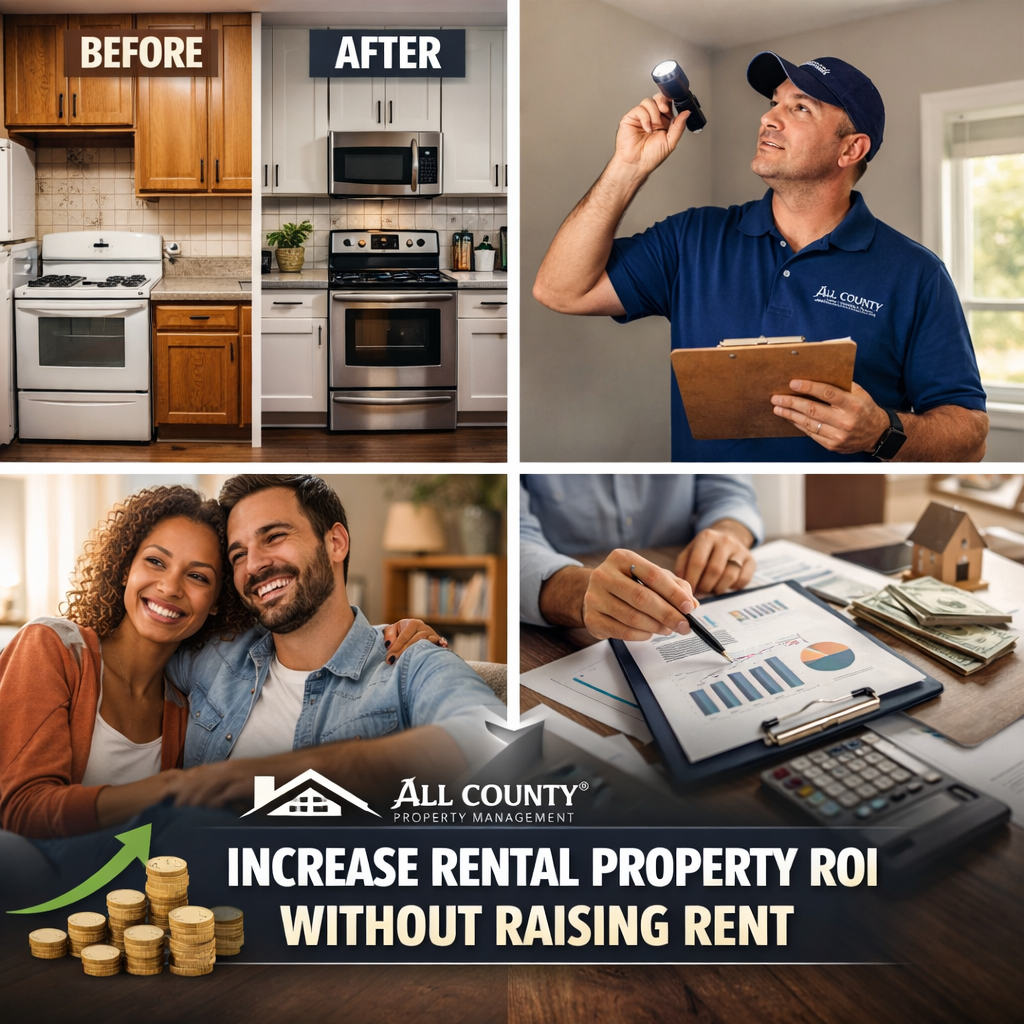

The Ultimate Guide to Increasing Rental Property ROI Without Raising Rent
For many property owners, the first instinct to improve profitability is to raise rent. While that can work in certain markets, it often comes with risks—longer vacancies, resident turnover, and increased wear from frequent move-ins and move-outs.
The truth is, the most successful real estate investors focus on operational efficiency, resident satisfaction, and long-term strategy to increase rental property ROI.
At All County®, we’ve spent over 35 years helping property owners maximize returns—without unnecessary risk.
This guide breaks down the most effective ways to increase your rental property ROI without raising rent.
What Is Rental Property ROI (and Why It Matters)
Return on investment (ROI) measures how effectively your rental property generates income relative to its costs.
Improving ROI isn’t just about earning more—it’s about:
- Reducing unnecessary expenses
- Maximizing occupancy
- Protecting your asset long-term
If you’re building a long-term strategy, explore our insights on financing for investment properties to strengthen your overall investment approach.
1. Reduce Vacancy and Turnover
Vacancy is the biggest silent profit killer.
Even a few extra vacant weeks per year can significantly reduce your annual income.
How to Reduce Vacancy:
- Price your property competitively
- Market aggressively across multiple channels
- Respond quickly to inquiries
- Streamline your leasing process
Our property management services are designed to minimize vacancy and keep your property consistently producing income.
2. Improve Resident Retention
Long-term residents are one of the most powerful drivers of ROI.
Turnover costs include:
- Cleaning and repairs
- Marketing and leasing fees
- Lost rent during vacancy
How to Increase Retention:
- Respond quickly to maintenance requests
- Communicate clearly and professionally
- Create a positive rental experience
Learn more about retention in our blog on The Value of a Good Resident.
3. Make Smart, ROI-Driven Upgrades
Not all renovations are created equal.
Focus on upgrades that:
- Attract quality residents
- Reduce maintenance costs
- Increase perceived value
High-ROI Improvements:
- Interior paint refresh
- Updated fixtures and lighting
- Durable flooring (LVP, tile)
- Minor kitchen and bath upgrades
Avoid over-improving beyond your market.
4. Implement Preventative Maintenance
Reactive maintenance leads to:
- Higher repair costs
- Resident dissatisfaction
- Emergency situations
A preventative approach:
- Extends the life of systems
- Reduces costly breakdowns
- Protects your investment
The U.S. Department of Housing and Urban Development emphasizes the importance of maintaining safe, well-kept housing to preserve property value and resident satisfaction.
5. Control and Audit Expenses
Many property owners lose money through unnoticed inefficiencies.
Key Areas to Review:
- Vendor pricing
- Insurance coverage
- Property tax assessments
- Utility usage
Even small savings can significantly increase your ROI over time.
6. Price Strategically (Not Emotionally)
Overpricing leads to longer vacancies.
Underpricing leaves money on the table.
The goal is market-aligned pricing that maximizes occupancy and income.
According to the National Association of Realtors, proper market positioning is critical to achieving consistent, long-term real estate returns.
7. Leverage Professional Property Management
This is where many investors see the biggest ROI improvement.
A professional property management company:
- Reduces vacancy
- Screens high-quality residents
- Controls maintenance costs
- Ensures legal compliance
- Improves overall efficiency
Discover how All County Property Management helps property owners maximize returns while reducing stress and risk.
8. Focus on Long-Term Wealth, Not Short-Term Gains
Raising rent aggressively may create short-term income—but can lead to:
- Higher turnover
- Increased vacancy
- More wear and tear
A stable, well-managed property with long-term residents often delivers better lifetime ROI.
For a broader strategy, explore our guide on building long-term wealth through rental properties.
💡 Final Thoughts: Work Smarter, Not Harder
Increasing rental property ROI isn’t about squeezing every dollar out of rent—it’s about running a smarter, more efficient operation.
When you:
✔ Reduce vacancy
✔ Retain great residents
✔ Control expenses
✔ Maintain your property
You create a stronger, more predictable, and more profitable investment.
At All County®, we help property owners do exactly that—every day.
We have locations throughout the country. Find your nearest All County office.
❓ Frequently Asked Questions About Increasing Rental Property ROI
What is the best way to increase rental property ROI?
The best way to increase rental property ROI is by reducing vacancy, improving resident retention, controlling expenses, and maintaining the property proactively. Raising rent isn’t always necessary when operations are optimized.
Can you increase rental income without raising rent?
Yes, you can increase rental income without raising rent by minimizing vacancy time, reducing turnover costs, and improving operational efficiency through better property management practices.
How does reducing vacancy improve ROI?
Reducing vacancy increases your total annual rental income by ensuring your property is occupied more consistently, which directly improves your overall return on investment.
What upgrades provide the highest ROI for rental properties?
High-ROI upgrades include fresh paint, updated lighting, durable flooring, and minor kitchen or bathroom improvements that attract quality residents without over-improving the property.
Why is resident retention important for ROI?
Resident retention reduces costly turnover expenses such as repairs, marketing, and lost rent. Long-term residents provide stable income and help maximize profitability.
Does professional property management really increase ROI?
Yes, professional property management can increase ROI by reducing vacancy, screening better residents, controlling maintenance costs, and ensuring compliance with local laws and regulations.
How often should I review my rental property expenses?
You should review your rental property expenses at least annually, but ideally quarterly, to identify cost-saving opportunities and ensure your property is operating efficiently.
Is raising rent the fastest way to increase ROI?
Raising rent can increase ROI in the short term, but it may also lead to higher vacancy and turnover. A balanced approach focused on long-term stability often delivers better results.
Ready to hire a
property manager?
With 85 locations across the U.S. servicing more than 30,000 residential properties, our experts are ready to help provide the best property management experience.
Find a Property Manager