
The Hidden Costs of Self-Managing a Rental Property
- Jun 11, 2026
- 4 min read
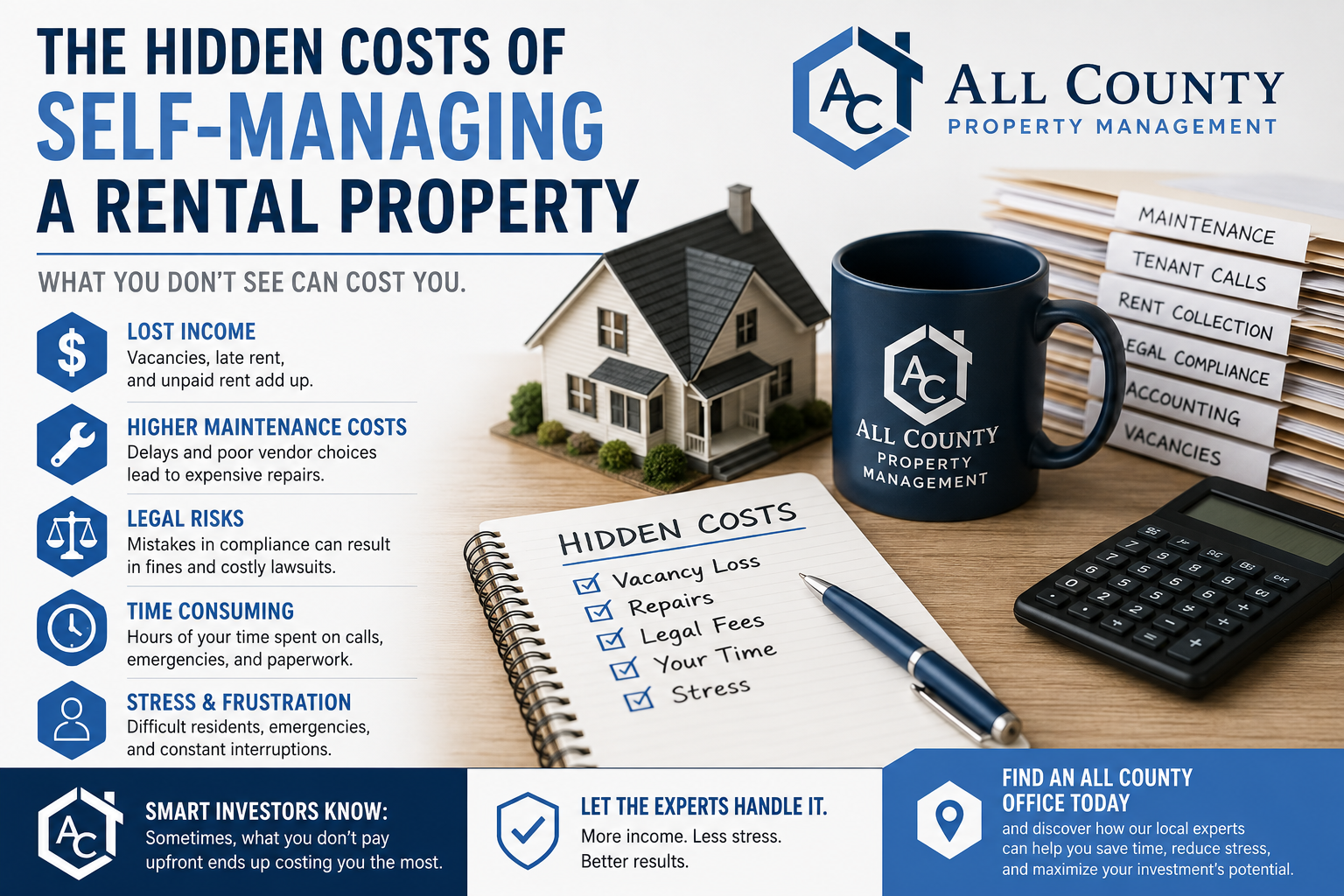

The Hidden Costs of Self-Managing a Rental Property
Many rental property owners choose to self-manage because they believe it will save money. On the surface, avoiding a management fee may seem like a smart financial decision. However, many landlords quickly discover that the hidden costs of self-managing a rental property can far outweigh the perceived savings.
From vacancies and maintenance issues to legal compliance and resident relations, self-managing a rental property requires significant time, expertise, and attention. While some owners are successful managing their own properties, many underestimate the true financial and personal costs involved.
If your goal is to maximize your return on investment and protect your asset, it’s important to understand the hidden costs of self-managing a rental property before deciding to handle everything yourself.
The Cost of Vacancy
One of the largest expenses landlords face is vacancy. Every day a property sits empty represents lost income that can never be recovered.
Many self-managing landlords struggle with pricing their property correctly, creating effective marketing campaigns, and responding quickly to prospective residents. As a result, vacancies often last longer than necessary.
Consider the impact:
| Vacancy Duration | Monthly Rent | Income Lost |
|---|---|---|
| 1 Week | $2,000 | $500 |
| 2 Weeks | $2,000 | $1,000 |
| 1 Month | $2,000 | $2,000 |
| 2 Months | $2,000 | $4,000 |
| 3 Months | $2,000 | $6,000 |
One extra month of vacancy can easily cost more than a year’s worth of professional property management fees.
For a deeper look at investment performance, see our Rental Property Cash Flow Analysis article.
Screening Mistakes Can Be Extremely Expensive
Finding a resident is relatively easy. Finding the right resident is where experience matters.
A poor resident placement can result in:
- Unpaid rent
- Property damage
- Lease violations
- Eviction costs
- Extended vacancy after move-out
Many landlords focus only on credit scores and income. However, comprehensive screening should include rental history, employment verification, background checks, and income validation.
A single bad placement can cost thousands of dollars and months of frustration. That’s why many successful investors consider resident screening one of the most important aspects of protecting their investment.
You may also enjoy reading our article on The Value of a Good Resident.
Maintenance Costs Are Often Higher Than Expected
Many self-managing landlords attempt to save money by handling maintenance themselves or hiring the cheapest contractor available.
Unfortunately, delayed repairs often become larger and more expensive problems.
For example:
- A small plumbing leak becomes water damage.
- A minor roof issue becomes a major roof replacement.
- Ignoring HVAC maintenance leads to system failure.
Professional property managers often have established vendor relationships, preferred pricing, and systems designed to address issues before they become costly emergencies.
Preventative maintenance not only reduces expenses but also helps retain quality residents and protect property value.
Legal Compliance Is More Complex Than Ever
Landlord-tenant laws continue to evolve. Fair Housing regulations, security deposit requirements, lease enforcement procedures, and assistance animal accommodations all require careful attention.
A simple mistake can expose landlords to:
- Fines
- Lawsuits
- Administrative complaints
- Lost time and legal expenses
Many owners don’t realize they are responsible for understanding and complying with all applicable federal, state, and local housing regulations.
As regulations become more complex, legal compliance becomes one of the highest hidden costs of self-managing a rental property.
For additional guidance, review our Fair Housing and Assistance Animals Guide.
Your Time Has Value
One of the most overlooked costs of self-managing a rental property is the value of your own time.
Many landlords spend hours each month:
- Answering calls and emails
- Coordinating maintenance
- Showing properties
- Collecting rent
- Handling resident concerns
- Managing accounting and reporting
Let’s assume you spend just 10 hours per month managing a rental property and value your time at $50 per hour.
10 Hours × $50 = $500 Per Month
$500 × 12 Months = $6,000 Per Year
Suddenly, self-management doesn’t seem quite as inexpensive as it first appeared.
Successful investors understand that time is one of their most valuable assets.
The Hidden Cost of Stress
Owning rental property should help create financial freedom—not constant stress.
Self-managing landlords often deal with:
- Late-night maintenance emergencies
- Difficult resident conversations
- Lease enforcement issues
- Eviction concerns
- Unexpected repairs
- Compliance questions
While these challenges may not appear on a financial statement, they have a real impact on quality of life.
Many property owners eventually discover that the peace of mind provided by professional management is worth far more than they initially expected.
Self-Managing vs. Professional Property Management
| Area | Self-Managing Rental Property | Professional Property Management |
| Resident Screening | Limited tools and experience | Comprehensive screening processes |
| Marketing | Owner-created listings | Professional marketing systems |
| Vacancy Reduction | Longer average vacancy | Proven leasing strategies |
| Rent Collection | Owner-managed | Established collection procedures |
| Maintenance | Owner coordinates vendors | Trusted vendor network |
| Legal Compliance | Owner responsibility | Professional oversight |
| Accounting | Manual tracking | Detailed owner reporting |
| Emergencies | Owner receives calls | Management team handles issues |
| Time Commitment | High | Minimal |
| Stress Level | High | Significantly reduced |
| Long-Term ROI | Often impacted by mistakes | Focused on maximizing returns |
Professional Property Management Is an Investment
Many owners view property management as an expense. Successful investors often view it differently.
Professional property management can help:
- Reduce vacancy
- Improve resident retention
- Protect property condition
- Maintain legal compliance
- Improve operational efficiency
- Free up valuable time
- Increase long-term profitability
When evaluating the hidden costs of self-managing a rental property, it’s important to consider more than management fees alone. The true cost includes your time, potential mistakes, vacancy losses, maintenance issues, and stress.
Conclusion
The hidden costs of self-managing a rental property often extend far beyond what landlords initially expect. Vacancy losses, maintenance expenses, legal compliance risks, resident issues, and the value of your time can significantly impact your overall return on investment.
While self-management may be the right choice for some owners, many investors find that professional property management delivers better financial performance, reduced stress, and greater freedom to focus on growing their portfolios.
At All County Property Management, we help rental property owners maximize income, protect their investments, and enjoy the benefits of ownership without the day-to-day burden of management.
Your rental property should be building wealth, not creating another full-time job. Find an All County office today and let our professionals help you maximize your property’s performance.
Ready to hire a
property manager?
With 88 locations across the U.S. servicing more than 30,000 residential properties, our experts are ready to help provide the best property management experience.
Find a Property Manager