
Why Long-Term Rentals Often Outperform Seasonal Rentals for Real Estate Investors
- May 26, 2026
- 4 min read
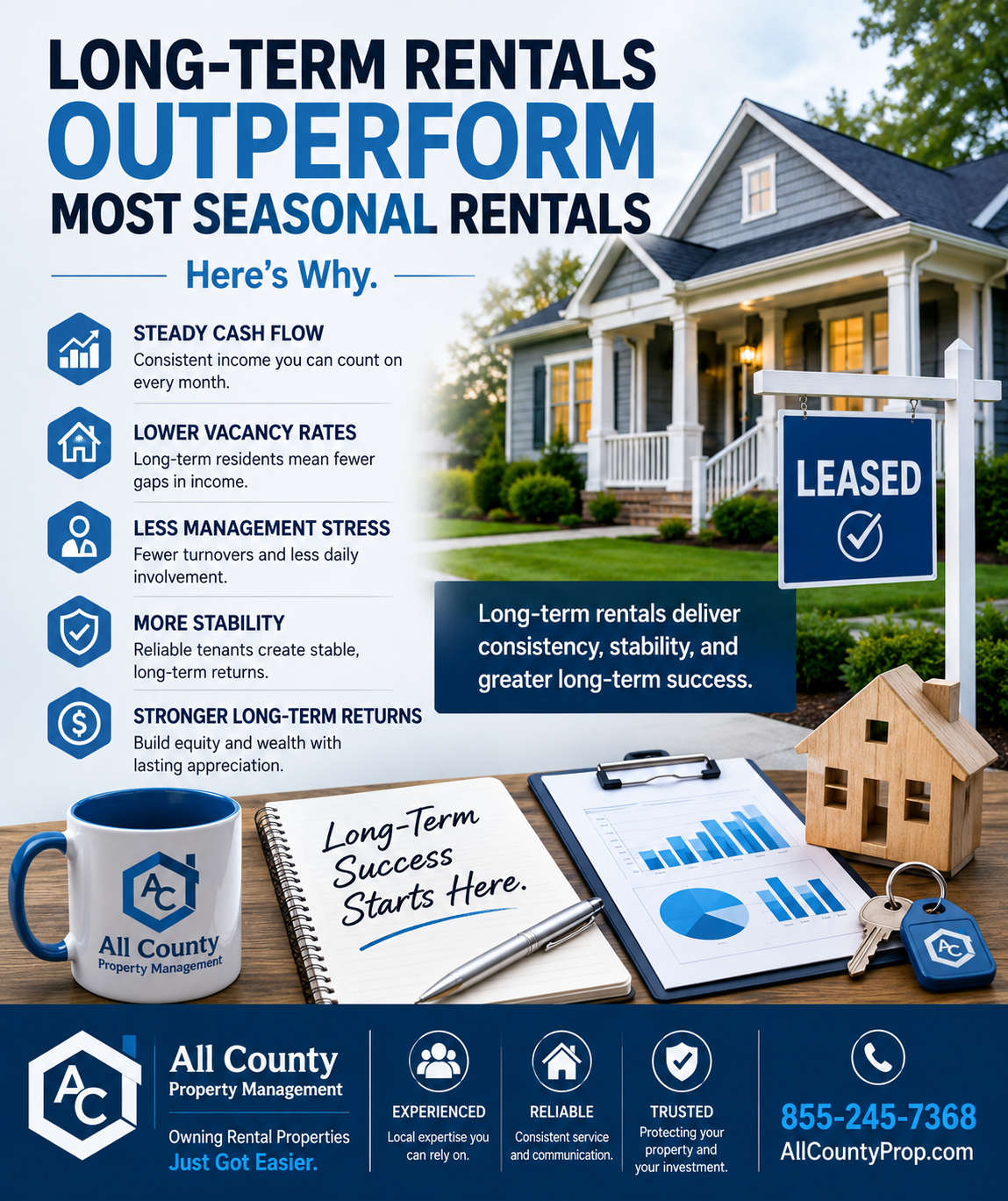

Why Long-Term Rentals Often Outperform Seasonal Rentals for Real Estate Investors
Many real estate investors are drawn to the idea of seasonal rentals because of the potential for high nightly rates and vacation-driven demand. While short-term and seasonal properties can generate impressive income during peak months, long-term rentals often outperform them when investors look at stability, risk, appreciation, and true long-term wealth building.
For investors focused on consistent cash flow, reduced stress, and sustainable growth, long-term rentals remain one of the strongest strategies in real estate.
Consistent Income Creates Predictable Cash Flow
One of the biggest advantages of long-term rentals is predictable monthly income. A quality resident who signs a 12-month lease provides dependable monthly revenue rather than relying on fluctuating bookings.
Seasonal rentals may produce high income during holidays or tourist seasons, but many markets experience slow periods where occupancy drops significantly. Owners still face mortgage payments, taxes, insurance, utilities, and maintenance costs even when the property sits vacant.
Long-term rentals help investors:
- Reduce income volatility
- Better forecast expenses
- Create a steady monthly cash flow
- Build long-term financial stability
For many investors, predictable income is far more valuable than chasing occasional peak-season profits.
“According to the National Association of Realtors, housing demand continues to remain strong in many markets due to ongoing inventory shortages.”
Lower Vacancy Rates Mean More Profitability
Seasonal rentals often experience frequent turnover. Every vacancy creates costs, including:
- Cleaning fees
- Marketing expenses
- Booking platform fees
- Furnishing replacements
- Utilities
- Time spent managing reservations
Long-term residents typically stay much longer, reducing turnover costs and vacancy periods. Even a few extra vacant months per year can dramatically reduce profits on a seasonal property.
A well-managed long-term rental with reliable residents may quietly outperform a seasonal property simply because it remains occupied year-round.
Long-Term Rentals Require Less Daily Management
Seasonal rentals operate almost like hospitality businesses. Owners or managers must constantly handle:
- Guest communication
- Check-ins and check-outs
- Cleaning coordination
- Reviews and ratings
- Last-minute cancellations
- Furnishing upkeep
- Pricing adjustments
Long-term rentals generally require far less day-to-day involvement. Once a qualified resident is placed, the property becomes much more passive.
This makes long-term rentals especially attractive for investors who want to scale their portfolios without becoming overwhelmed by operational demands.
“The U.S. Department of Housing and Urban Development provides valuable information about housing trends, rental demand, and fair housing guidance for property owners.”
Financing and Insurance Are Often Easier
Lenders usually view long-term rental properties as lower-risk investments. As a result, financing may be easier to obtain and sometimes comes with better terms.
Insurance for seasonal rentals can also be significantly more expensive due to higher liability exposure and increased guest turnover.
Additionally, many cities and counties are increasing regulations on short-term rentals, including:
- Licensing requirements
- Occupancy restrictions
- HOA limitations
- Additional taxes
- Zoning restrictions
Long-term rentals generally face fewer regulatory challenges, making them more stable investments over time.
Long-term success in rental property investing often comes from strong systems, resident communication, and proactive management practices like those offered by All County Property Management.
Appreciation and Equity Matter More Than Many Investors Realize
Some investors focus only on monthly income and overlook one of real estate’s greatest wealth-building tools: appreciation.
Long-term rental owners benefit from several wealth-building factors simultaneously:
- Property appreciation over time
- Mortgage principal paydown
- Tax advantages
- Depreciation benefits
- Increasing rental rates
Even if a seasonal rental occasionally produces higher gross income, the long-term rental may still outperform overall when factoring in reduced expenses, lower stress, stable occupancy, and long-term equity growth.
Real estate wealth is often built slowly and steadily rather than through unpredictable spikes in income.
Analyzing true rental property performance requires looking beyond gross income and evaluating long-term cash flow stability.
Long-Term Residents Often Treat Properties Better
While there are exceptions, long-term residents typically develop a stronger sense of responsibility toward the property because it becomes their home.
Seasonal guests may not have the same level of attachment, which can lead to:
- More wear and tear
- Higher cleaning costs
- Increased maintenance
- Furniture damage
- Noise complaints
Maintaining a stable resident relationship often results in lower operational costs and fewer surprises for owners.
Economic Shifts Can Impact Seasonal Rentals Faster
Seasonal rentals are often heavily tied to tourism and discretionary spending. During economic uncertainty, travel demand can decline quickly.
Housing, however, remains a basic need. People will always need places to live regardless of market conditions. This creates more consistent demand for long-term housing compared to vacation lodging.
For investors seeking resilience during changing economic cycles, long-term rentals can provide greater stability.
At All County Property Management, we help rental property owners maximize returns through professional management, resident retention strategies, and long-term investment planning. Owning rental properties just got easier.
The Best Investment Strategy Depends on Your Goals
Seasonal rentals can absolutely work well in the right location and under the right conditions. However, they often require more time, higher expenses, and greater operational involvement than many investors expect.
Long-term rentals continue to outperform for many investors because they offer:
- Consistent cash flow
- Lower vacancy risk
- Easier management
- Reduced operational costs
- Long-term appreciation
- More predictable returns
- Stronger scalability
For investors focused on building lasting wealth rather than chasing short-term income spikes, long-term rentals often offer a stronger overall investment strategy.
If you are looking to increase your property’s return, visit All County today. We have offices across the U.S. click here to find the All County location nearest you.
Ready to hire a
property manager?
With 88 locations across the U.S. servicing more than 30,000 residential properties, our experts are ready to help provide the best property management experience.
Find a Property Manager