
Your Rental Property Is a Business—Are You Running It Like One?
- Jul 01, 2026
- 5 min read
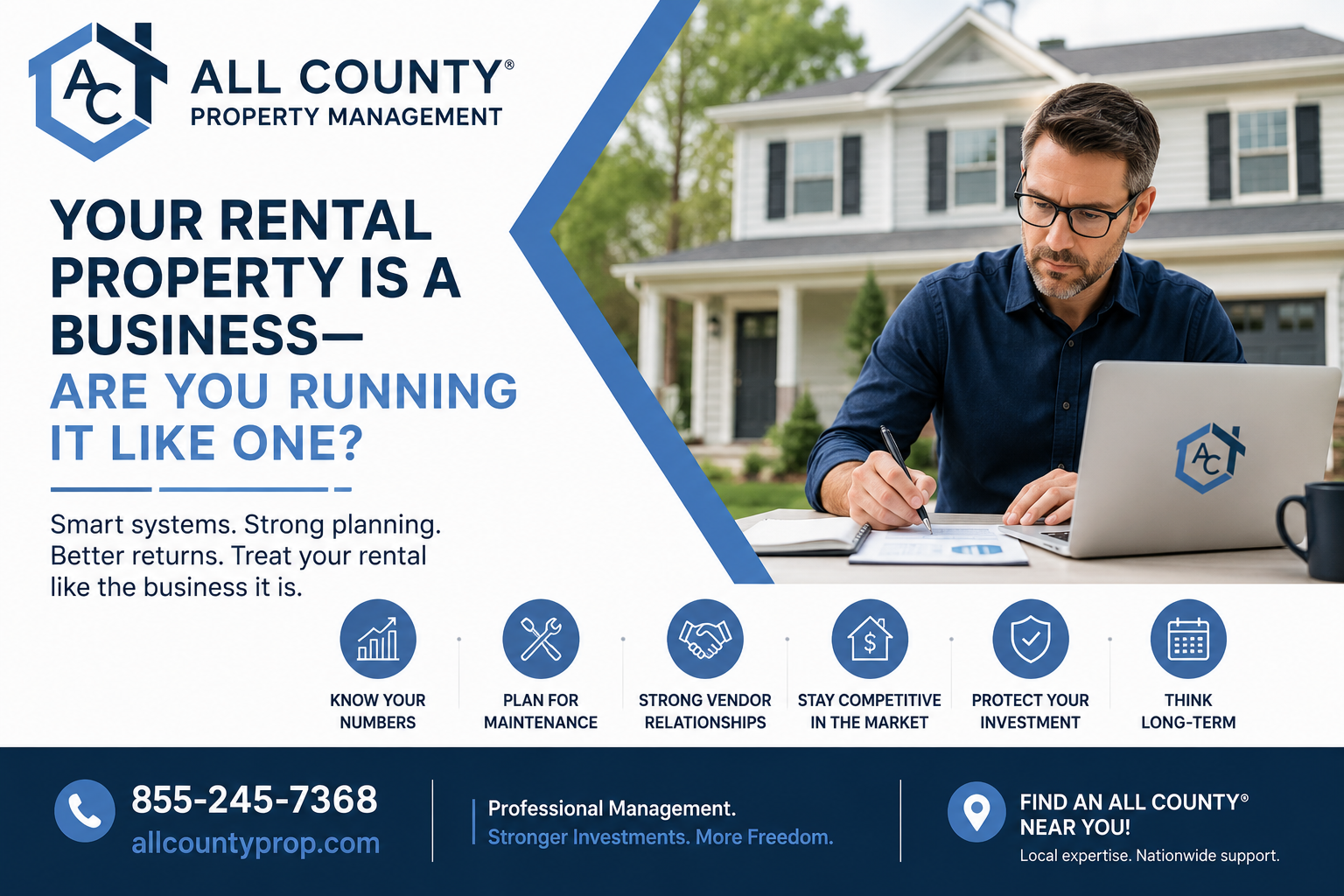

Your Rental Property Is a Business—Are You Running It Like One?
Owning rental property can be one of the best ways to build long-term wealth—but only if you treat it like a business.
Many property owners unintentionally manage their rental property as a side project. Rent is deposited each month, repairs are handled only when something breaks, and financial records are kept only during tax season. While that approach may seem to work in the short term, it often leads to higher expenses, unnecessary stress, and lower returns over time.
Professional investors understand that successful rental ownership isn’t about reacting to problems—it’s about preventing them.
Here’s what it means to operate your rental property like a true business.
1. Know Your Numbers
Every successful business tracks its financial performance.
As a rental property owner, you should know:
- Monthly cash flow
- Annual maintenance costs
- Property taxes
- Insurance expenses
- Vacancy rate
- Average repair costs
- Return on investment (ROI)
- Capital improvement budget
If you can’t quickly answer these questions, you’re making decisions without the information you need.
Professional reporting helps owners understand exactly how their investment is performing and identify opportunities to improve profitability.
2. Plan for Maintenance Instead of Waiting for Emergencies
Businesses budget for equipment replacement.
Rental owners should do the same.
Major systems such as:
- HVAC equipment
- Water heaters
- Roofing
- Appliances
- Flooring
- Exterior paint
all have predictable life expectancies.
Planning for these expenses avoids financial surprises and helps keep tenants satisfied by addressing issues before they become emergencies.
Preventive maintenance is almost always less expensive than emergency repairs.
3. Build Strong Vendor Relationships
Imagine trying to find an electrician during a holiday weekend after your tenant loses power.
Professional property managers maintain relationships with licensed, insured vendors who can respond quickly when issues arise.
Having dependable vendors means:
- Faster repairs
- Better pricing
- Consistent workmanship
- Happier residents
- Less downtime
Waiting until something breaks is rarely the best business strategy.
4. Review Your Rental Income Every Year
Many owners avoid increasing rent because they don’t want to lose a good tenant.
While tenant retention is important, failing to review market rents annually can leave thousands of dollars on the table.
A professional market analysis considers:
- Comparable rental homes
- Neighborhood demand
- Property condition
- Local vacancy trends
- Seasonal market changes
The goal isn’t always to maximize rent—it’s to maximize long-term profitability while keeping great residents.
5. Understand Your Legal Responsibilities
Every business operates under laws and regulations.
Rental housing is no different.
Owners should stay informed about:
- Fair Housing requirements
- Security deposit regulations
- Required notices
- Habitability standards
- Local rental ordinances
- Lease compliance
Laws change regularly, and even small mistakes can become costly.
Professional property management helps reduce compliance risks by keeping current with changing regulations and industry best practices.
6. Protect Your Investment with Regular Inspections
You wouldn’t own a commercial building without periodically inspecting it.
Residential rentals deserve the same attention.
Routine inspections help identify:
- Water leaks
- Unauthorized occupants
- Pet damage
- Safety hazards
- Deferred maintenance
- Lease violations
Small problems discovered early are usually inexpensive to correct. Left unnoticed, they can become significant repairs.
Every rental property owner should understand their responsibilities under federal Fair Housing laws. The U.S. Department of Housing and Urban Development provides valuable guidance for housing providers.
7. Think Long-Term
Successful investors don’t focus solely on next month’s rent.
They consider:
- Property appreciation
- Mortgage principal reduction
- Tax advantages
- Capital improvements
- Tenant retention
- Long-term cash flow
- Future resale value
Every decision should support the long-term health of the investment.
Keeping an eye on rental listings on Zillow® is a great way to understand local market trends, helping you price your property competitively and attract qualified residents.
Why Professional Property Management Makes Business Sense
Owning rental property shouldn’t feel like a second full-time job.
While managing your own rental property may seem like a way to save money, the hidden costs of legal mistakes, extended vacancies, maintenance issues, and lost time can quickly outweigh the savings. Learn more in our blog, “The Hidden Costs of Self-Managing Your Rental Property.”
Professional property management provides systems, financial reporting, preventive maintenance, legal compliance, marketing expertise, and resident communication—all designed to help your investment perform at its best.
At All County Property Management, we don’t just collect rent. We help property owners operate their rental investments like successful businesses.
Whether you own one rental home or an expanding portfolio, our goal is to help you protect your investment, reduce unnecessary risk, and maximize long-term returns.
Ready to Take a More Strategic Approach?
If you’re ready to stop reacting to problems and start managing your investment like a business, contact All County Property Management today. Our experienced team can show you how professional management helps preserve your property’s value while giving you more time to focus on what matters most.
Frequently Asked Questions
Is one rental property considered a business?
Yes. Even a single rental property involves income, expenses, legal obligations, financial reporting, and asset management. Treating it like a business helps improve profitability and reduce risk.
How often should I review my rental property’s performance?
At least annually, although many investors review financial performance quarterly to monitor expenses, rental income, and maintenance trends.
Do professional property managers help with budgeting?
Yes. Professional managers provide financial reporting, maintenance planning, and market analysis that help owners make informed business decisions.
What is preventive maintenance?
Preventive maintenance includes routine inspections and scheduled servicing of major systems before failures occur, reducing emergency repairs and extending the life of your property.
Ready to manage your rental property like a successful business?
Whether you own a single rental home or a growing investment portfolio, All County Property Management is here to help you maximize your returns, protect your investment, and give you back your time. With experienced local professionals backed by a nationwide network, you’ll have the confidence of knowing your property is in capable hands.
Find an All County Property Management office near you and discover how professional management can help you achieve your investment goals.
Ready to hire a
property manager?
With 88 locations across the U.S. servicing more than 30,000 residential properties, our experts are ready to help provide the best property management experience.
Find a Property Manager